Rhinoplasty is the most requested facial surgery in Europe, and one of the most commonly performed abroad. It’s easy to see why. A nose job in Italy, the UK or Germany typically costs €7,000–€12,000. In destinations like Albania, hospital-based surgeons charge €2,500–€3,500 for the same procedure, including anaesthesia and an overnight stay. For many patients that difference decides whether the surgery happens at all.
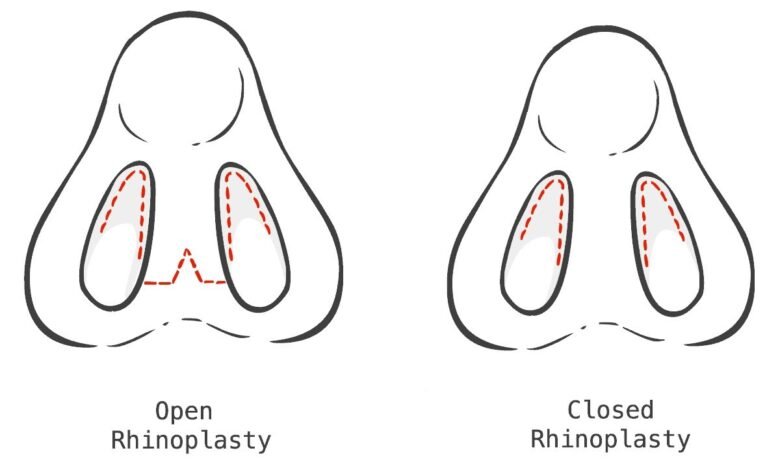
Open vs. closed rhinoplasty: the incision approach depends on how much reshaping is needed
But rhinoplasty is also one of the most technically demanding operations in plastic surgery, and one of the hardest to correct if it goes wrong. Choosing to have it done in another country adds a layer of planning most people underestimate. This guide walks through the whole process — from the first consultation to the moment your final result settles — so you know what you’re committing to.
Before you fly: the consultation
A good rhinoplasty starts months before surgery, and it starts with the right surgeon rather than the right price.
Get a real consultation, not a sales call. You should speak to the surgeon on video, not just a coordinator. Send clear photos — front, both profiles, and from below — and expect the surgeon to ask about breathing problems, previous injuries, allergies and any earlier nose surgery. If they don’t ask about function, only appearance, that’s a warning sign.
Understand the type of rhinoplasty you need. Cosmetic changes to the bridge or tip, a septoplasty to fix a deviated septum, or a septorhinoplasty combining both are different operations with different recovery profiles. Patients with breathing difficulties often benefit from the combined procedure, and it’s worth confirming the surgeon is experienced with both the aesthetic and functional sides.
Ask about open vs. closed technique. Neither is universally better; the right one depends on how much reshaping is needed. What matters is that your surgeon can explain why they’ve chosen one for your case.
Look at real results at 12 months. Rhinoplasty results at six weeks tell you almost nothing — the nose is still swollen. Ask to see the surgeon’s own patients a year out, ideally with a similar starting point to yours.
Choosing where the surgery happens
Rhinoplasty is usually performed under general anaesthesia and takes one to three hours. That makes the facility matter, not just the surgeon.
Most cosmetic providers abroad are standalone clinics. Some are excellent, but none have an intensive care unit or a cardiologist in the building. A smaller number of surgeons operate inside full hospitals. American Hospital’s plastic surgery department in Tirana, for example, performs rhinoplasty in certified hospital operating rooms with dedicated anaesthesiologists, pre-operative cardiac screening done in-house, and overnight observation by nursing staff. For an operation that involves general anaesthesia and work close to the airway, that safety net is worth weighing heavily against a lower quote from a clinic without it.
Surgery day and the first week
The day before, you’ll typically meet your surgeon in person for a final assessment, complete blood work and an anaesthesia consultation, and confirm the plan you agreed online. Photographs are taken for your medical record.
On the day, the operation is done under general anaesthesia. Afterwards you’ll have a splint on the bridge of your nose and possibly light internal packing or splints. Most hospitals keep rhinoplasty patients overnight, and you’ll be discharged the next morning with medication and written aftercare instructions.
Days 1–3 are the roughest. Expect swelling, bruising under the eyes, a blocked feeling in the nose and mild to moderate discomfort. Sleep with your head elevated, avoid bending over, and don’t blow your nose. Cold compresses around — never on — the nose help with bruising.
Days 4–7 bring steady improvement. Bruising fades from purple to yellow, swelling comes down noticeably, and most patients feel comfortable walking around the city by day five. You’ll want to avoid sun, glasses resting on the bridge, and any risk of bumping your nose.
Day 7–10: the splint comes off. This is the appointment that determines when you can fly, and you should plan your return around it rather than the other way round. Most hospital-based teams recommend staying 7–10 days after surgery before travelling home.
See also: <strong>Cedar vs Heat-Treated Hemlock Around a Sauna Heater: A Cost Breakdown</strong>
Going home: weeks two to twelve
Once you’re back, the visible swelling continues to fall over the next few weeks. Most people return to office work at around two weeks, though a little residual swelling and a slightly “puffy” tip are normal for months. Strenuous exercise, swimming and contact sports should wait 4–6 weeks. Glasses can usually return at 6 weeks if they don’t rest heavily on the bridge.
Remote follow-up matters here. A reputable surgeon abroad will schedule video check-ins — commonly at 2 weeks, 6 weeks and 3 months — and give you a direct contact for any concerns in between. Ask for this schedule in writing before you book.
The long game: months three to twelve
Rhinoplasty is unusual in how slowly it finishes. Around 80% of the swelling is gone by three months, but the tip — where skin is thickest — can keep refining for a full year, sometimes longer with thicker skin. Patients who judge their result at month two are almost always too early, which is why surgeons resist discussing revision until at least 12 months have passed.
Revision rates for primary rhinoplasty run at roughly 5–15% across the profession. Before travelling, confirm the surgeon’s revision policy: whether minor touch-ups are included, under what conditions, and who covers travel if a revision is agreed.
Is rhinoplasty abroad right for you?
It’s a good fit if you’ve found a surgeon whose results you’ve seen at 12 months, who has answered your functional and aesthetic questions directly, who operates in a facility with real medical backup, and if you can commit to 7–10 days on site plus disciplined remote follow-up.
It’s a poor fit if you’re choosing purely on price, can’t stay for the splint removal, have unrealistic expectations set by heavily edited photos, or have a complicated medical history that makes cross-border care risky.
Handled properly, having rhinoplasty in a destination like Albania can deliver the same outcome as at home for a fraction of the cost. Handled carelessly, it’s an expensive mistake to fix. The difference lies almost entirely in the decisions you make before you ever get on the plane.