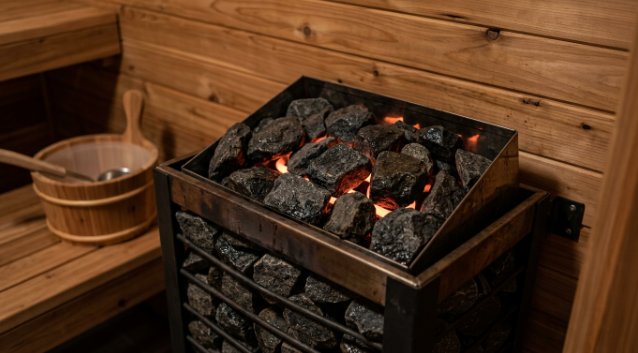
The wood immediately around a sauna heater, the backer panel and nearby bench edge, takes more direct heat stress than any other surface in a small cabin, which makes the cedar-versus-hemlock choice matter more there than elsewhere. Cedar costs roughly 15 to 30 percent more per board foot but resists scorching and moisture better over years of close heat exposure. Heat-treated hemlock costs less and holds up fine if properly kiln-dried, though it can show heat discoloration sooner near a heater running at higher output in a compact cabin.
1. Backer Panel Cost
The backer panel sits closest to the heater, often within the manufacturer’s minimum clearance distance, and takes the most direct radiant heat of any wood surface in the room. A cedar backer panel for a small heater zone typically costs more per square foot than the rest of the cabin’s paneling if buyers upgrade just that section, while a full hemlock build keeps material costs lower and consistent across the whole interior. Some owners split the difference, using hemlock for the bulk of the cabin and cedar specifically around the heater zone where heat exposure is highest.
2. Bench Edge and Nearby Seating Cost
The bench edge closest to the heater sees both radiant heat and, on models where water is used, occasional steam exposure. Cedar’s natural moisture resistance holds up well here without much extra sealing, while hemlock, especially if not fully kiln-dried, can be more prone to surface checking near this high-exposure zone over several years of regular sessions. The cost difference for just this bench section, rather than the whole cabin, is usually a modest dollar figure, making it a reasonable upgrade spot even for buyers using hemlock everywhere else.
3. Guard Rail and Clearance Trade-Offs
A guard rail around the heater can reduce the required clearance distance to nearby wood on some models, which is useful in a small cabin, but it does not remove the need for a properly rated backer material directly behind the unit. Buyers should not treat a guard rail as a substitute for choosing durable wood or a proper non-combustible base in that zone; it is an addition to code and manufacturer clearance requirements, not a replacement for them.
4. Scorch and Discoloration Over Time
Wood closest to a heater discolors faster than wood farther away, regardless of species, simply from repeated heat exposure. Cedar’s oils give it a modest edge in resisting visible scorching compared with hemlock, particularly on a higher-output heater in a small room where the heat zone is more concentrated relative to the cabin’s total wall area. Heat-treated hemlock that has been properly kiln-dried performs reasonably, but buyers should expect visible color change near the heater sooner than on cedar, which is a cosmetic issue rather than a safety one as long as clearance distances are respected.
5. Replacement Cost If the Panel Needs Redoing
Because the heater zone panel takes more wear than the rest of the cabin, it is also the section most likely to need replacement first, sometimes a decade or more before the rest of the interior. Budgeting for this as a smaller, isolated future cost, rather than assuming the whole cabin needs redoing at once, keeps long-term maintenance spending more predictable. A cedar panel in this zone, while pricier upfront, often pushes that replacement timeline out further than hemlock.
6. Total Small-Cabin Cost Comparison
For a compact cabin, the price difference between an all-cedar interior and an all-hemlock interior adds up to a real but manageable number, generally in the range of several hundred dollars depending on total square footage and grade. Using cedar just in the heater zone and hemlock elsewhere splits that difference further, giving most of the durability benefit where it matters most for a fraction of the cost of an all-cedar build. Buyers comparing heater models and clearance specs to plan a small-cabin wood layout around them can review current units at SweatDecks.com, since clearance distance directly determines how much backer panel area actually needs the more durable wood.
7. Which Wood Makes Sense for Which Buyer
A buyer building a small cabin on a tight budget can reasonably use heat-treated hemlock throughout, including the heater zone, as long as it is properly kiln-dried and clearances are followed exactly. A buyer planning heavier, more frequent use, or one who wants the classic cedar scent and the longest possible panel lifespan near the heater, gets more value from cedar in that specific zone even while using hemlock elsewhere to control overall cost.
8. Sealant and Finish Costs Near the Heater
Whichever species goes into the heater zone, sealant reapplication schedules differ once heat cycling is factored in on top of normal moisture exposure. Cedar generally stretches its resealing interval longer than hemlock in this specific zone, often by a season or more, which is a small but real recurring cost difference beyond the initial material price. Buyers budgeting for the full life of the cabin, not just the build day, should weigh this ongoing cost alongside the upfront board-foot price when deciding where to spend the cedar premium.
9. Sourcing Considerations for a Small Order
Because a heater zone panel only needs a modest quantity of wood compared with an entire cabin, sourcing cedar for just that section is often more practical than it sounds, even for buyers who chose hemlock for cost reasons elsewhere. Many suppliers sell cedar in smaller board-foot quantities suited to exactly this kind of targeted upgrade, so the sourcing hurdle is usually smaller than buyers expect once they start pricing it out for a single panel rather than a full interior.
What Does the Research Say About Heat Exposure and Sauna Materials?
No study in the available research distinguishes health outcomes by cabin wood species, since the research tracks sauna bathing habits and cardiovascular associations rather than construction materials. A 2018 systematic review in Evidence-Based Complementary and Alternative Medicine and a 2001 review in The American Journal of Medicine both describe associations tied to regular sauna sessions generally. Wood choice around the heater affects durability and maintenance cost, not the health associations themselves, but a cabin that holds up well and looks good stays in regular use longer, which is the pattern tied to those associations.
Frequently Asked Questions
Should the wood around a sauna heater be cedar or hemlock? Cedar resists scorching and moisture better near the heater; heat-treated hemlock costs less and works fine if properly kiln-dried.
Does the wood near a heater need to be different from the rest of the cabin? Not necessarily a different species, but that zone takes more heat stress so grade and thickness matter more there.
How much more does cedar cost for a heater surround than hemlock? Typically 15 to 30 percent more per board foot, a modest total for just the surround area.
Does a guard rail change what wood is needed near the heater? It can reduce required clearance but does not replace the need for a durable, properly rated panel behind the heater.
References
- Clinical Effects of Regular Dry Sauna Bathing: A Systematic Review, Evidence-Based Complementary and Alternative Medicine, 2018
- Benefits and risks of sauna bathing, The American Journal of Medicine, 2001
- Does the Combination of Finnish Sauna Bathing and Other Lifestyle Factors Confer Additional Health Benefits? A Review of the Evidence, Mayo Clinic Proceedings, 2023
By Owen Bradshaw