Explore Number Registry Archives for 3518015032, 3246825278, 3513230138, 3311159023, 3511066328

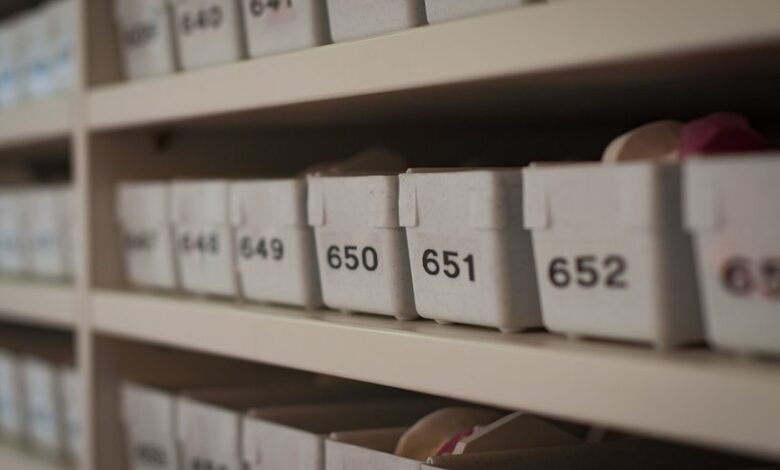
The exploration of these number registry entries—3518015032, 3246825278, 3513230138, 3311159023, and 3511066328—will trace provenance, timestamps, and status flags. The approach is precise and methodical, focusing on objective indicators to map usage patterns. Cross-system links and issuer records are examined to assess coherence and detect anomalies. The process yields actionable insights into allocation trends, prompting further verification and scrutiny as patterns emerge. A careful join across sources invites a sustained inquiry.
What the Number Registry Reveals About These Entries
The Number Registry provides a structured snapshot of the five entries, revealing key attributes such as issuer codes, registration dates, status flags, and linkage to related records. The analysis emphasizes provenance patterns, allocation trends, cross system mappings, and authenticity verification, delivering objective, concise criteria without interpretive bias, while ensuring traceable attributes support independent verification and future reconciliation across disparate databases.
Tracing Provenance and Usage of 3518015032, 3246825278, 3513230138, 3311159023, 3511066328
Initial provenance and usage patterns are mapped by tracing issuer codes, registration timestamps, status flags, and cross-referenced linkages for the five entries 3518015032, 3246825278, 3513230138, 3311159023, and 3511066328, with emphasis on traceable attributes that support independent verification and future reconciliation across related registries.
Provenance tracing reveals allocation trends, enabling disciplined, transparent assessment within autonomous, freedom-oriented audit frameworks.
Cross-Referencing: How Entries Interconnect Across Systems
Cross-referencing across systems involves mapping entry identifiers to corroborate provenance and detect cross-registry linkages, ensuring that each of the five identifiers—3518015032, 3246825278, 3513230138, 3311159023, and 3511066328—appears consistently in issuer records, timestamps, and status fields. This process supports cross system mappings and strengthens archive provenance through disciplined, transparent interconnections across registries.
Practical Insights: Verifying Authenticity and Allocation Trends Through Archives
In practice, archival verification hinges on objective indicators of authenticity and allocation patterns, enabling practitioners to discern legitimate entries from anomalies across multiple registries. The approach emphasizes verification steps, corroborated provenance tracing, and careful evaluation of allocation patterns, using inter system links to reveal cross-register consistency. Through systematic checks, integrity is preserved, fostering transparent access and informed interpretation for freedom-seeking researchers.
Conclusion
This analysis consolidates provenance traces, registration timestamps, and status flags for the five numbers, revealing coherent allocation patterns and cross-system linkages. By cross-referencing issuer records and examining archival connections, consistent provenance emerges, with anomalies highlighted for further scrutiny. The methodology supports transparent interpretation and credible verification of usage trajectories across registries, reinforcing confidence in archival integrity. Are the observed inter-system links sufficient to confirm durable authenticity, or do unresolved gaps invite targeted verification?